
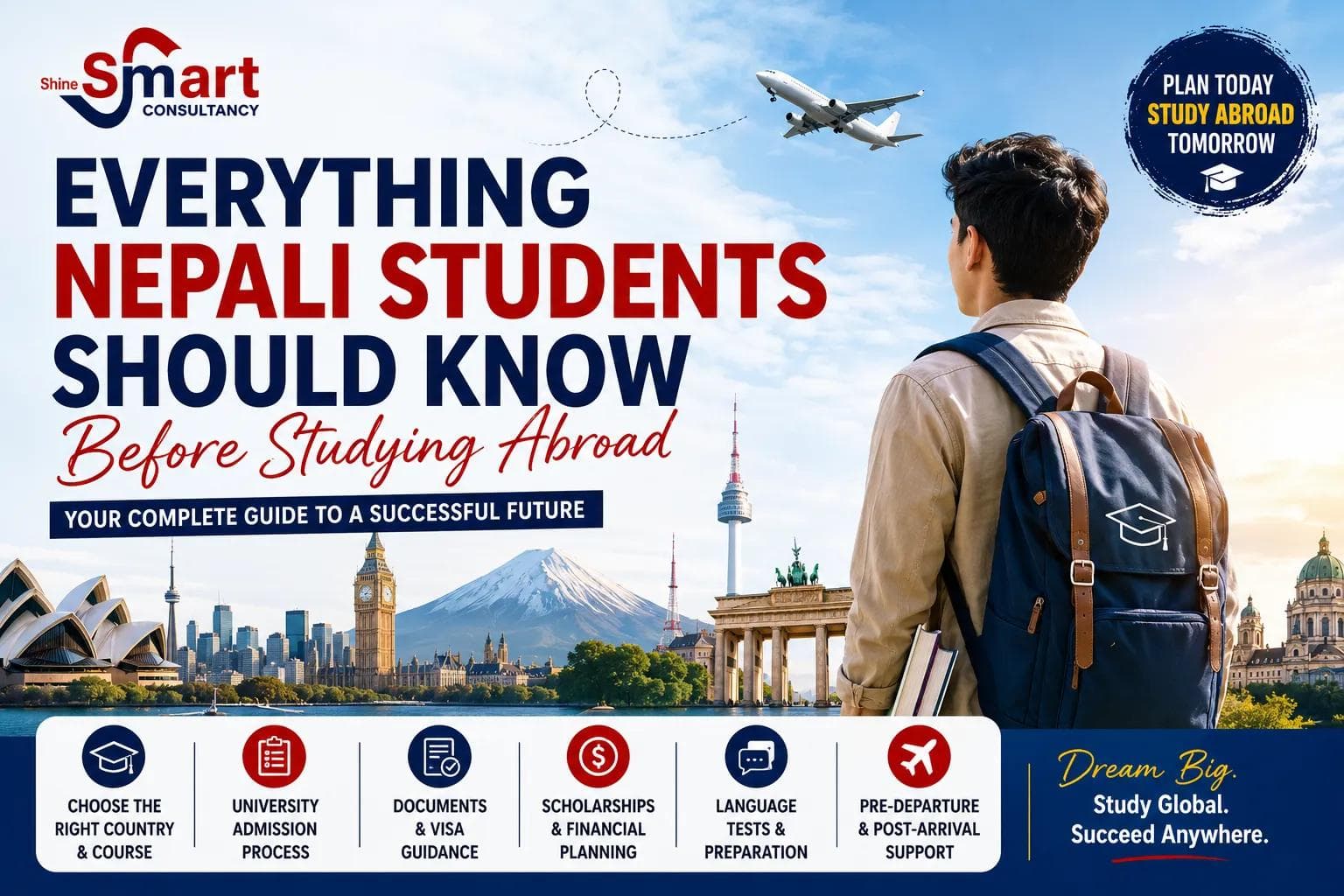
Complete Study Abroad Guide for Nepali Students | Shine Smart Consultancy
⏱️ 6 min read
Learn everything Nepali students should know before studying abroad, including country selection, scholarships, language tests, financial planning, admissions, visas, and career opportunities.
Students Must Know Before Studying Abroad from Nepal
Studying abroad is one of the biggest investments in your education and future career. Every year, thousands of Nepali students choose destinations such as Australia, the United Kingdom, Canada, Japan, South Korea, Germany, the USA, New Zealand, and other countries to pursue higher education and gain international exposure.
However, many students focus only on getting an admission letter without fully understanding the process, costs, visa requirements, career opportunities, and responsibilities of studying overseas.
Making informed decisions before applying can save you time, money, and unnecessary stress.
In this guide, we'll cover everything Nepali students should know before starting their study abroad journey.
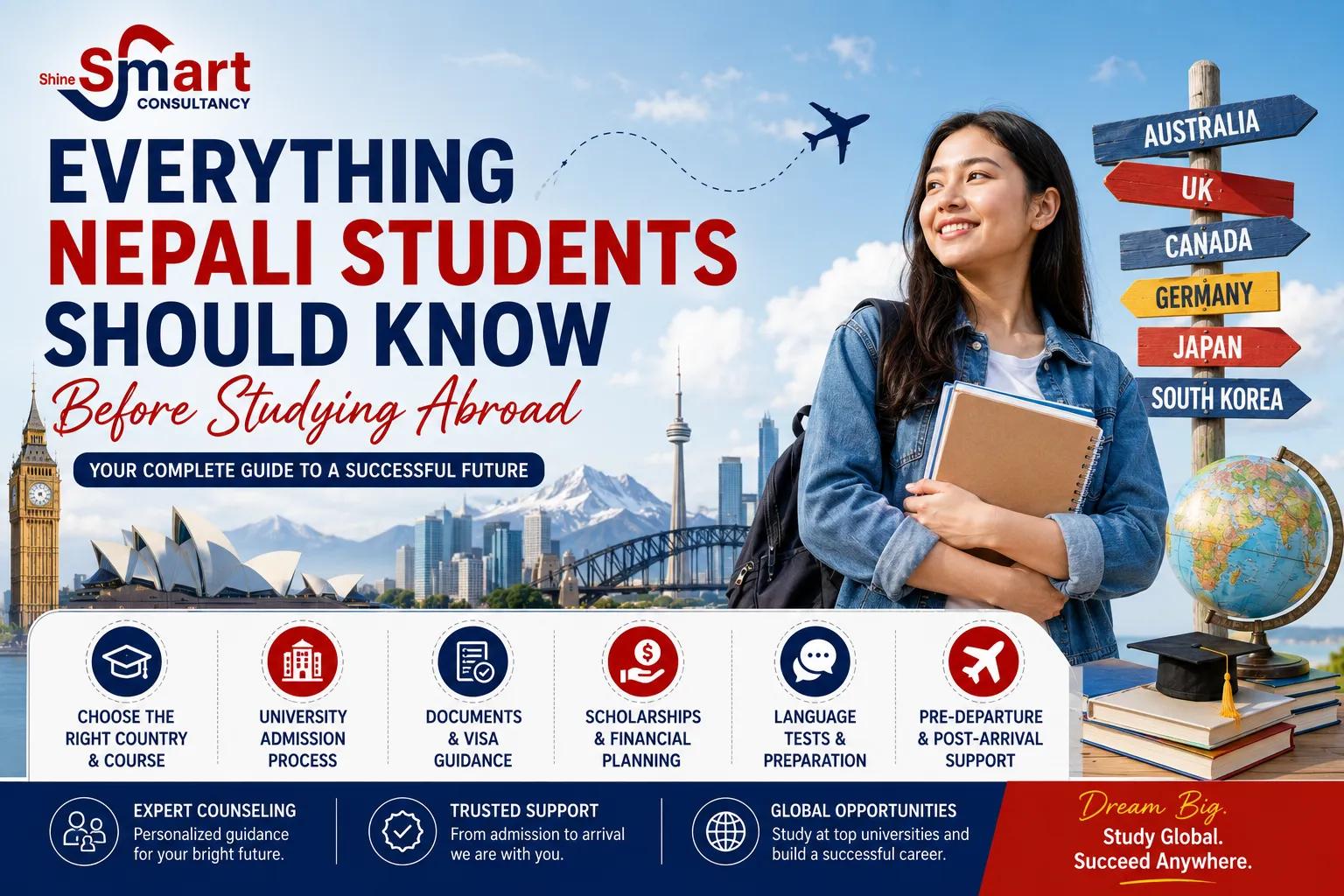
1. Choose the Right Country
The first and most important decision is selecting the country that best matches your goals.
Consider the following factors:
- Quality of education
- Tuition fees
- Cost of living
- Scholarship opportunities
- Post-study work options
- Career opportunities
- Safety
- Climate
- Language requirements
- Immigration policies
Different countries suit different students.
For example:
- Australia – High-quality education, work opportunities, and multicultural environment.
- United Kingdom – Shorter degree duration and globally recognized universities.
- Canada – Strong education system and post-graduation work opportunities.
- Germany – Affordable education with many public universities and excellent engineering programs.
- Japan – Advanced technology, scholarships, and growing demand for international students.
- South Korea – High-quality universities, modern campuses, and increasing scholarship opportunities.
Choose a destination based on your academic and career objectives rather than trends. Read more Study Abroad Countries
2. Select the Right Course
Many students choose courses simply because friends or relatives recommend them.
Instead, ask yourself:
- What subjects do I enjoy?
- What career do I want?
- What skills do I already have?
- What jobs are in demand?
- Will this qualification help me in the future?
Choosing the right course increases your chances of academic success and career satisfaction.
3. Research the University Carefully
Not every university offers the same quality of education.
Before applying, research:
- University ranking
- Accreditation
- Course curriculum
- Faculty qualifications
- Campus facilities
- Student reviews
- Graduate employment rate
- Internship opportunities
- Industry partnerships
A good university should support both academic and professional development.
4. Understand the Total Cost
Many students only consider tuition fees.
You should also calculate:
- Tuition fees
- Visa fees
- Medical insurance
- Accommodation
- Food
- Transportation
- Books
- Personal expenses
- Emergency funds
- Flight tickets
Prepare a realistic financial plan before beginning your application.
5. Check Scholarship Opportunities
Many universities offer scholarships based on:
- Academic performance
- Leadership
- Community involvement
- Financial need
- Sports or extracurricular achievements
Apply early because scholarship deadlines may differ from admission deadlines.
6. Know the English Language Requirements
Most universities require proof of English proficiency.
Common tests include:
- IELTS
- PTE Academic
- TOEFL
- Duolingo English Test (accepted by some institutions)
Each university sets its own minimum score requirements.
Prepare well to improve your chances of admission.
7. Prepare Your Documents
Keep all required documents ready.
Common documents include:
- Academic certificates
- Academic transcripts
- Passport
- Citizenship certificate (where applicable)
- Birth certificate (if required)
- English proficiency test results
- Statement of Purpose (SOP)
- Letters of Recommendation
- Updated CV
- Passport-size photographs
- Financial documents
Missing documents can delay your application.
8. Understand the Visa Process
Each country has different visa requirements.
Generally, students may need:
- Admission letter
- Financial proof
- Valid passport
- Medical examination (if required)
- Police clearance (if required)
- Visa interview (for some countries)
Always check the latest immigration requirements before applying.
Also Contact us
9. Financial Planning is Essential
Studying abroad requires responsible budgeting.
Create a monthly budget covering:
- Rent
- Food
- Utilities
- Internet
- Transportation
- Study materials
- Entertainment
- Savings
Learning financial management helps reduce stress during your studies.
10. Learn About Part-Time Work Rules
Many countries allow international students to work while studying, but the rules vary.
Understand:
- Maximum working hours
- Minimum wage (where applicable)
- Tax obligations
- Work permit conditions
Follow local laws and prioritize your studies.
11. Arrange Accommodation Before Arrival
Secure accommodation before traveling.
Options include:
- University hostels
- Student apartments
- Shared accommodation
- Homestays
Choose a safe location with convenient access to your campus.
12. Purchase Health Insurance
Many countries require international students to have health insurance.
Understand:
- What the insurance covers
- Hospital network
- Emergency services
- Claim procedures
Health insurance protects you from unexpected medical expenses.
13. Understand Cultural Differences
Moving abroad means adapting to a new culture.
Be prepared to experience:
- Different communication styles
- New food
- Different weather
- Diverse customs
- Academic expectations
Respecting local culture helps you integrate more easily.
14. Improve Your Communication Skills
Strong communication skills will help you:
- Make new friends
- Participate in class
- Find part-time work
- Build professional relationships
Practice speaking English regularly before departure.
15. Know Your Career Path
Think beyond graduation.
Research:
- Internship opportunities
- Graduate employment
- Licensing requirements (for regulated professions)
- Post-study work opportunities
- Further education options
Planning ahead helps you make better academic decisions.
16. Avoid Common Mistakes
Many students face problems because they:
- Apply without proper research.
- Ignore scholarship opportunities.
- Miss application deadlines.
- Submit incomplete documents.
- Underestimate living costs.
- Choose courses based only on trends.
- Depend on unverified information.
Careful planning can help you avoid these issues.
17. Choose a Trusted Education Consultancy
A reliable education consultancy can make the application process smoother by providing accurate guidance on university selection, admissions, documentation, and pre-departure preparation.
Before choosing a consultancy:
- Check its reputation.
- Read student reviews.
- Verify partnerships with universities.
- Ensure transparency regarding services and fees.
Why Choose Shine Smart Consultancy?
At Shine Smart Consultancy, we help students make informed decisions about studying abroad.
Our services include:
- Free Career Counseling
- University Selection
- Admission Assistance
- Scholarship Guidance
- IELTS & PTE Preparation
- Language Preparation
- Documentation Support
- Visa Guidance
- Pre-Departure Briefing
- Post-Admission Support
Our experienced counselors are committed to helping students achieve their international education goals.
Frequently Asked Questions (FAQs)
Which country is best for Nepali students?
The best country depends on your academic interests, budget, career goals, and preferred lifestyle.
How much money do I need to study abroad?
Costs vary depending on the country, university, course, and living expenses.
Can I work while studying?
Many countries allow international students to work part-time, subject to their visa conditions.
Is IELTS compulsory?
Not always. Some universities accept alternatives such as PTE, TOEFL, or Duolingo English Test, depending on their admission policies.
When should I start planning?
It's recommended to begin preparing at least 8–12 months before your intended intake.
Start Your Study Abroad Journey with Confidence
Studying abroad is a life-changing opportunity that requires careful planning and informed decision-making. Choosing the right country, course, and university—and understanding the application process—can significantly improve your chances of success.
At Shine Smart Consultancy, we provide personalized guidance to help students navigate every stage of their study abroad journey.
Contact Shine Smart Consultancy
📍 Office Address:
First Floor, Sallyan House, Bagbazar, Kathmandu, Nepal
📞 Phone: +977-015325565
💬 WhatsApp: +977 9768509661
📧 Email: shinesmartconsultancy523@gmail.com
🌐 Website: https://www.shinesmartconsultancy.com/
🔗 Learn More About Us: https://www.shinesmartconsultancy.com/about
📞 Contact Our Team: https://www.shinesmartconsultancy.com/contact
Ready to Take the Next Step?
Book your FREE consultation with Shine Smart Consultancy today and receive expert guidance on choosing the right country, university, and course for your future. Let us help you turn your study abroad dream into reality.